How Do I Fix Poor Wireless Range?
Poor range usually comes from what surrounds the antenna, not from the radio chip. A mismatched antenna, a ground plane that is too small, parts inside the antenna keep-out, or an enclosure, battery, or human body detuning it can each cost a large share of range. PDE measures the product as built in its owned RF chamber, re-tunes the matching network, and changes layout or placement only where tuning alone falls short.
Range problems usually trace back to a short list of causes:
- Antenna mismatch: chip and PCB antennas are tuned on a reference board. A different ground plane, enclosure, or nearby component shifts the resonance, and power that should radiate is reflected back instead.
- Ground plane and keep-out: copper, components, screws, or a battery inside the antenna keep-out zone detune it and block part of its pattern.
- Enclosure and body effects: plastic wall thickness, metal parts, coatings, and the hand or body of the user all load the antenna. A product worn on a belt behaves differently from one on a bench.
- Self-interference: switching regulators, clocks, and display lines can raise the noise floor at the receive frequency, so the radio hears less even when it transmits well.
- Measure the product as built. Radiated performance is measured in PDE's owned RF chamber, in the real enclosure, so the numbers reflect the product rather than an eval board.
- Re-tune the matching network. Component values in the antenna match are adjusted for the antenna as it actually sits in the housing.
- Check the receiver. Spectrum analyzers show whether noise from the rest of the board is desensitizing the radio.
- Change layout or placement only if needed. When tuning can't recover the range, antenna position, ground plane, or keep-out changes go into the next board revision.
- Verify before you build. The fix is confirmed in the chamber before boards or tooling are committed.
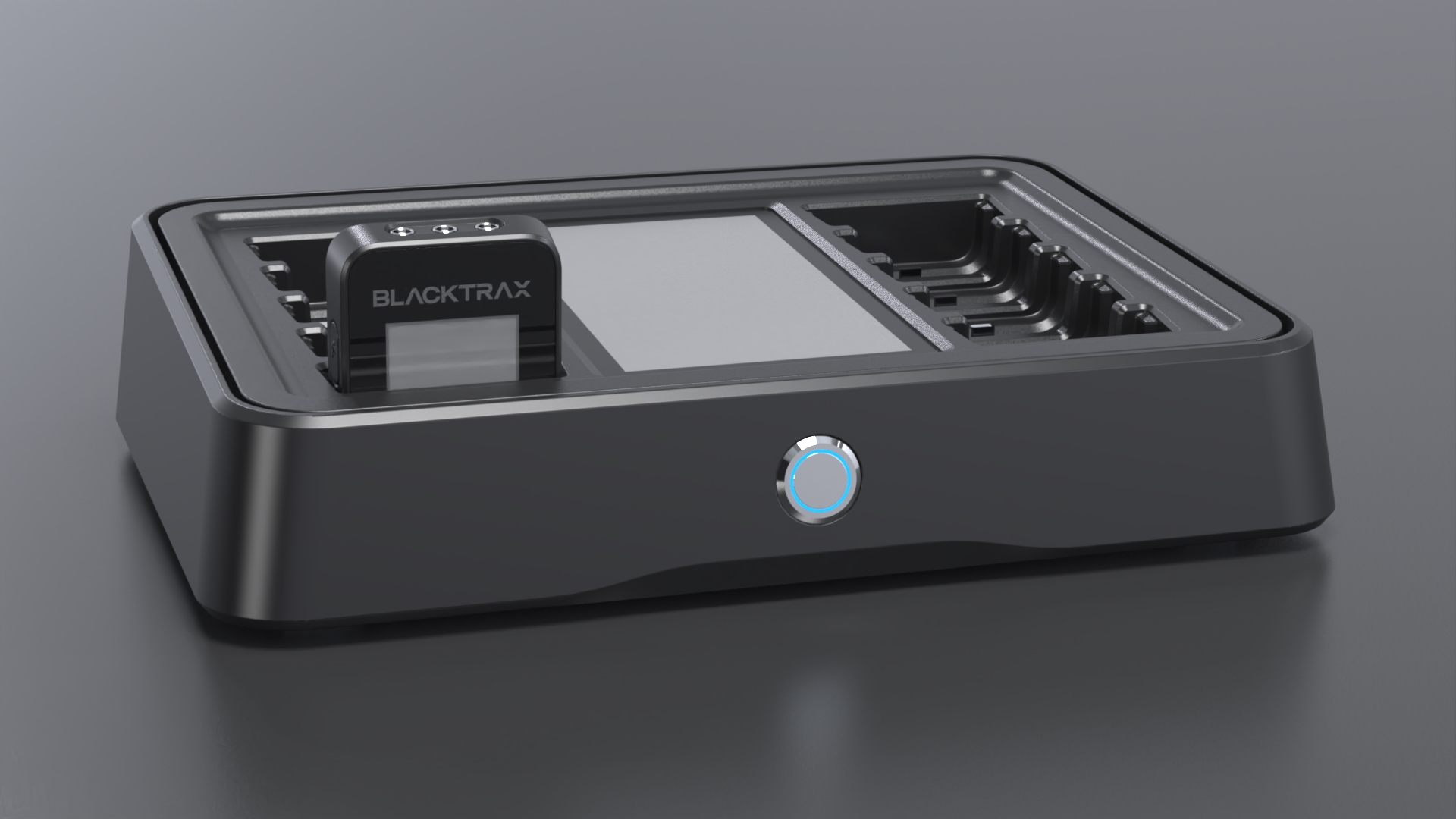
The CAST BlackTrax Beacon 2.0 is worn by performers as a belt pack and supports up to 85 units operating at once across 1,200 m² of stage. PDE designed its PCB layout and enclosure in parallel, so the board and the housing around it were resolved together rather than in separate tracks.