Designing an Electronic Device

How Do I Make A Product?

Making an electronic product takes eight steps in four stages: define what you’re building, prove out the risky parts, design and prototype the full system, then certify it and move into production. Work across disciplines overlaps, but the expensive commitments (prototype boards, a frozen design, production tooling) happen in order, each one only after the risks before it are resolved.

Leading Supporting Commitment
Product definition
Manufacturing
  1. Define the problem. Start with who the product is for, what it needs to do, and why existing products, if they exist, fall short. A rough idea is a fine starting point. Working through these questions is often the first thing we do with a new client.

    Product definition: leading Industrial design: supporting
  2. Write the requirements. Requirements define what success looks like: features, battery life, cost target, operating environment, and the certifications your markets require. They will change as you learn, but a written baseline keeps the team focused and makes trade-offs visible. Naming the certifications this early prevents design choices that are hard to certify later.

    Product definition: leading Industrial design: leading Electronics: supporting Mechanical: supporting Compliance: supporting
  3. Prove out the risky parts. Before committing to a full design, build quick prototypes of whatever is most likely to fail or matters most to your users, such as an unproven sensor, a tight power budget, or radio range inside a metal enclosure. A problem found on a development kit costs days. The same problem found after boards are built, moulds are cut, or radios are certified costs a board respin, a tooling change, or a retest.

    Product definition: supporting Industrial design: leading Electronics: leading Firmware: leading Mechanical: supporting Software & cloud: supporting
  4. Design the system together. Industrial design, electronics, firmware, and mechanical design start in parallel. The enclosure and circuit board are laid out around each other, and firmware developers help choose the processor so it has the memory and peripherals the software needs. Firmware development begins on development kits before the custom board exists. For connected products, cloud and mobile app work starts here too.

    Product definition: supporting Industrial design: leading Electronics: leading Firmware: leading Mechanical: leading Software & cloud: leading Manufacturing: supporting
  5. First prototype boards ordered

    Build and test working prototypes. The first custom boards come back, firmware is brought up on them, and 3D printed or machined enclosures let you hold and use the product. Expect more than one round. Pre-compliance testing at this stage catches EMC and radio problems while they are still inexpensive to fix.

    Product definition: supporting Industrial design: supporting Electronics: leading Firmware: leading Mechanical: leading Software & cloud: leading Compliance: supporting Manufacturing: supporting
  6. Design for manufacturing. Manufacturability is considered throughout, but once the design works it is refined to build reliably at volume and at your target cost. That means choosing parts with supply chain in mind, adding assembly-friendly mechanical features, and designing test fixtures for the production line.

    Electronics: supporting Firmware: leading Mechanical: leading Software & cloud: leading Manufacturing: leading
  7. Design frozen

    Certify. With the design frozen, the product goes to an accredited lab for the certifications your markets require, such as ISED, FCC, CE, or UL. Labs usually test production-equivalent units in the final enclosure, which is why this step waits until the design is complete.

    Electronics: supporting Firmware: supporting Mechanical: supporting Software & cloud: supporting Compliance: leading Manufacturing: leading
  8. Production tooling released

    Pilot and production. Production tooling is ordered, the contract manufacturer builds a small pilot run, and those units are checked before full-volume production begins. Moulds and assembly lines take weeks to set up, so the pilot run is the last chance to catch a problem before it is repeated across thousands of units.

    Electronics: supporting Firmware: supporting Mechanical: supporting Software & cloud: supporting Manufacturing: leading
Illustrative. Timing varies from project to project.
Designing an Electronic Device

What Does It Cost To Make A Product?

There is no single number. The cost of developing a product depends on what it has to do, and these usually decide it:

  • The disciplines it needs. A mechanical product with no electronics needs less design work than one with custom circuit boards, firmware, and an app.
  • Radios and markets. A wireless product needs RF design, pre-compliance testing, and lab certification in every market it's sold in.
  • What already exists. A working prototype, an industrial design, or an existing board shortens the work.
  • Unknowns. Unproven technology needs feasibility prototypes before the full design starts.
  • Volume and unit cost. A tight unit cost at high volume means more design time on part count, assembly, and tooling.

PDE prepares an estimate once it knows what the product has to do. Tell us about your product to start.

One Team, Every Discipline

Why Not Hire Individual Contractors?

Hardware from one firm, firmware from another, compliance from a third: nobody owns the integration, and when something breaks at the interfaces you’re the one who has to orchestrate the solution. PDE’s full service product development puts industrial design, electronics, firmware, cloud, and the regulatory pathway in one team, so you can focus on what the product needs to do while PDE takes it to production.

What If I Have A Designer I really Like to Work With, But They Don’t Do Everything?

While we work great as an integrated team, we’re also great at working with other designers. We’re more than happy to fill a single gap in your team or to fill every gap but one. Our team is full of skilled communicators who can work with your team, if you’ve already got one, or we can easily integrate your teammates into our team and documentation tools.

Does PDE Take Care of Project Management?

PDE champions the idea of Project Ownership which, if you get right down to it, is project management, but differs in that our Project Owners are also designers, which means your project is championed by someone who understands the technical details.

Isn’t it Cheaper to Hire Individual Contractors?

You might get a cheaper hourly rate hiring individual contractors, but we’ve seen integration nightmares time and time again where countless billable hours are wasted because, for example, a mechanical contractor hasn’t thought about how the PCB is going to fit into the enclosure or an electrical team puts down a part with too little Flash or RAM because they didn’t consult the firmware team before choosing the part. Sometimes these mistakes can be corrected quickly, but sometimes they can mean tossing out costly injections molds or throwing away thousands of dollars worth of PCBs. With the PDE approach all our designers talk to each other and input is received from relevant team members before things go to production.

Full Service vs. Single Discipline

How Comprehensive Are PDE's Design Services?

If you want to make a product, PDE can almost certainly get you from start to finish regardless of what it is. A lot of what we’ve been working on lately are connected devices utilizing all of our expertise:

But we love to work on products involving any combination of those things, whether that’s a purely mechanical product, a connected IoT device, a web/mobile app, or any combination of the services we offer.

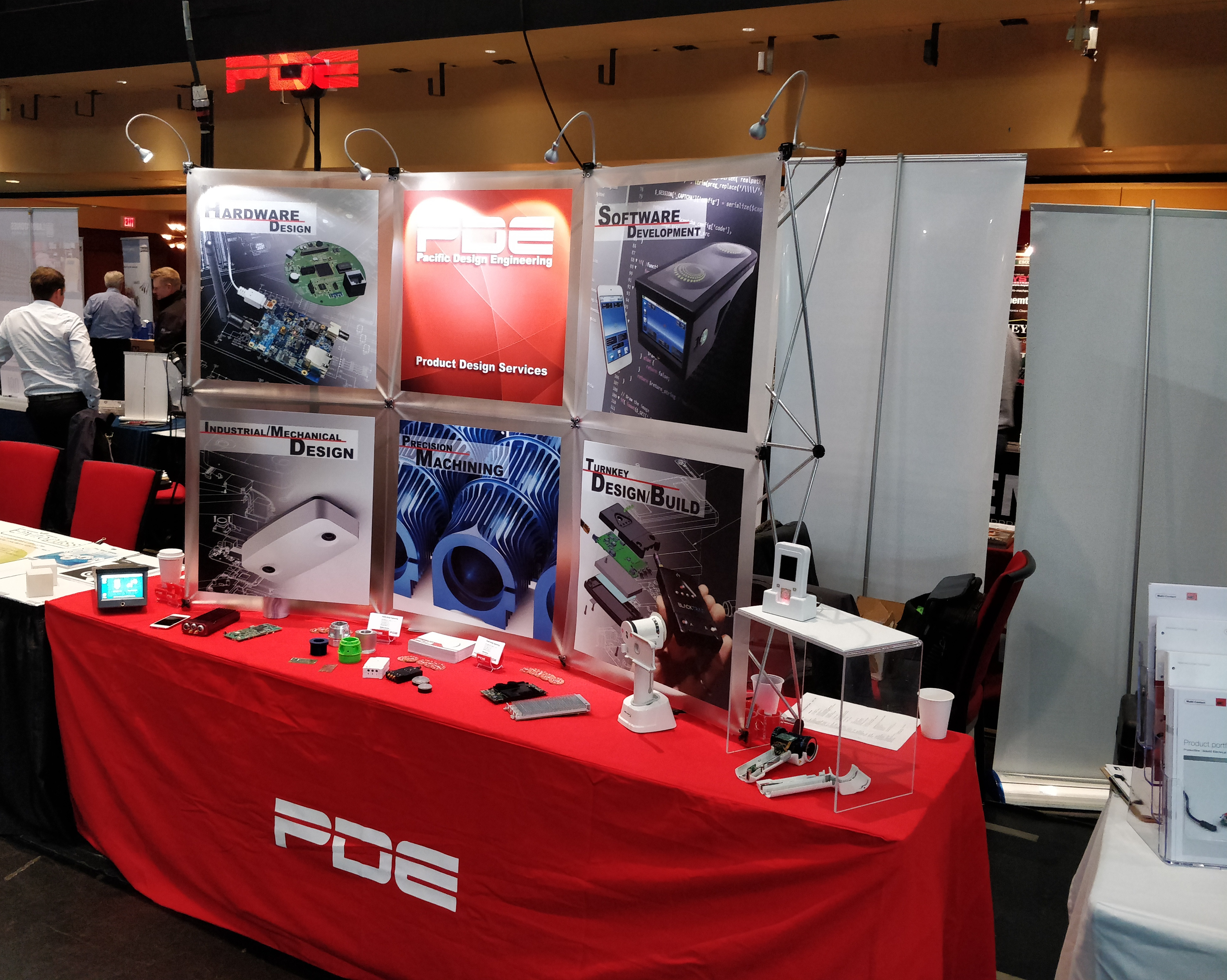
PDE trade show booth showing hardware, software, and mechanical design work side by side
From the Portfolio

Products We've Delivered End to End

iGuard For Stoves and Cooktops
Consumer Electronics

iGuard For Stoves and Cooktops

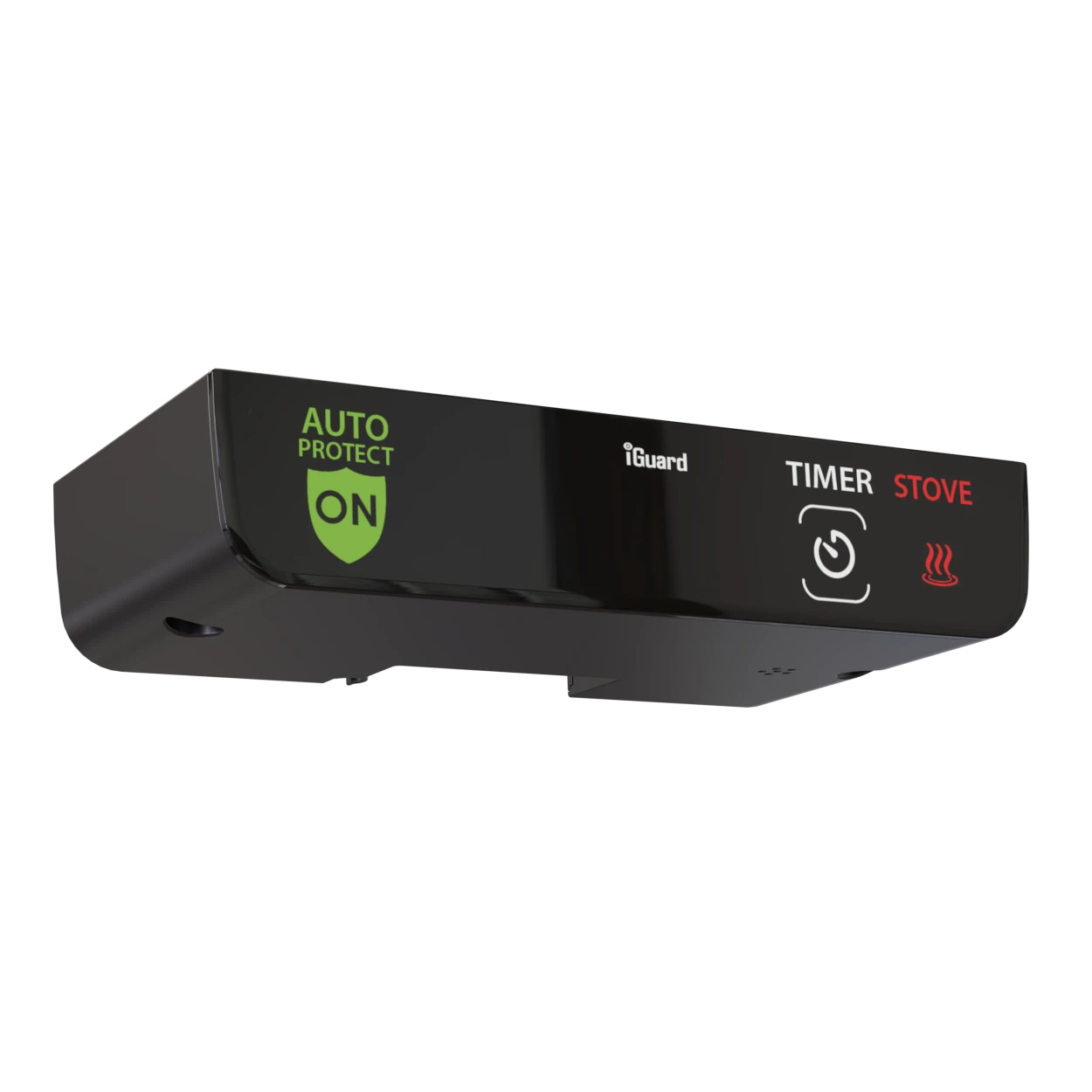
iGuard Home had a first generation forgotten cooking fire safety solution that was already saving lives and protecting homes. The second generation had to be a product every household would put on the counter: consumer-ready aesthetics, hidden sensor technology, wireless connectivity, and smart home integration, all delivered by one development partner across every discipline the redesign required.
View Case Study
VELscope Vx
Medical

VELscope Vx

The VELscope Vx is a hand-held device that provides dentists and hygienists with a portable examination system for the early detection of a wide variety of oral diseases, including pre-cancer and cancer. It is the only non-invasive adjunctive device clinically proven to help discover occult oral disease.
View Case Study
Beacon 2.0
Entertainment

Beacon 2.0

CAST Group set out to build the next generation of the BlackTrax Beacon: expand its hardware capabilities, achieve multi-jurisdictional regulatory certification, and prepare it for scalable manufacturing while maintaining tight control over quality, coordination, and execution.
View Case Study

‟We couldn't be happier with the outstanding service and high-quality products provided by PDE. We've been working with PDE for over 10 years and their team has demonstrated excellent professionalism, responsiveness, and attention to detail since the beginning. The level of care and expertise they bring to every interaction has made a real difference in our product development and our operations.”

— Aaron Densham, Director of Operations, CAST Group of Companies Inc.
FAQ

Questions We Get Asked

When does full service product development make more sense than hiring a single specialist?

When a product needs several disciplines to move together from the first concept sketch, rather than in sequence. If a project only needs one piece of the puzzle, PDE’s individual services, like Electronics Design or Software Development, are also available on their own.

Do we lose visibility or control by using one integrated team instead of several vendors?

No. With one team responsible for the whole product, design reviews cover every discipline together, and a problem at the interface between electronics, firmware, and mechanical is PDE’s to solve. PDE documents the work as it goes, and your team takes part in the design reviews.

Who owns the design files, source code, and documentation at the end of the project?

You do. Every design file, source code file, and documentation file produced during the engagement is yours, with no licensing restrictions and no ongoing fees to access your own product.

How does full service relate to PDE's Connected Products & IoT service?

Full service product development covers the full discipline stack for any hardware product. Connected Products & IoT is the same integrated approach applied specifically to products where security, cloud scalability, and fleet management are core architectural requirements.