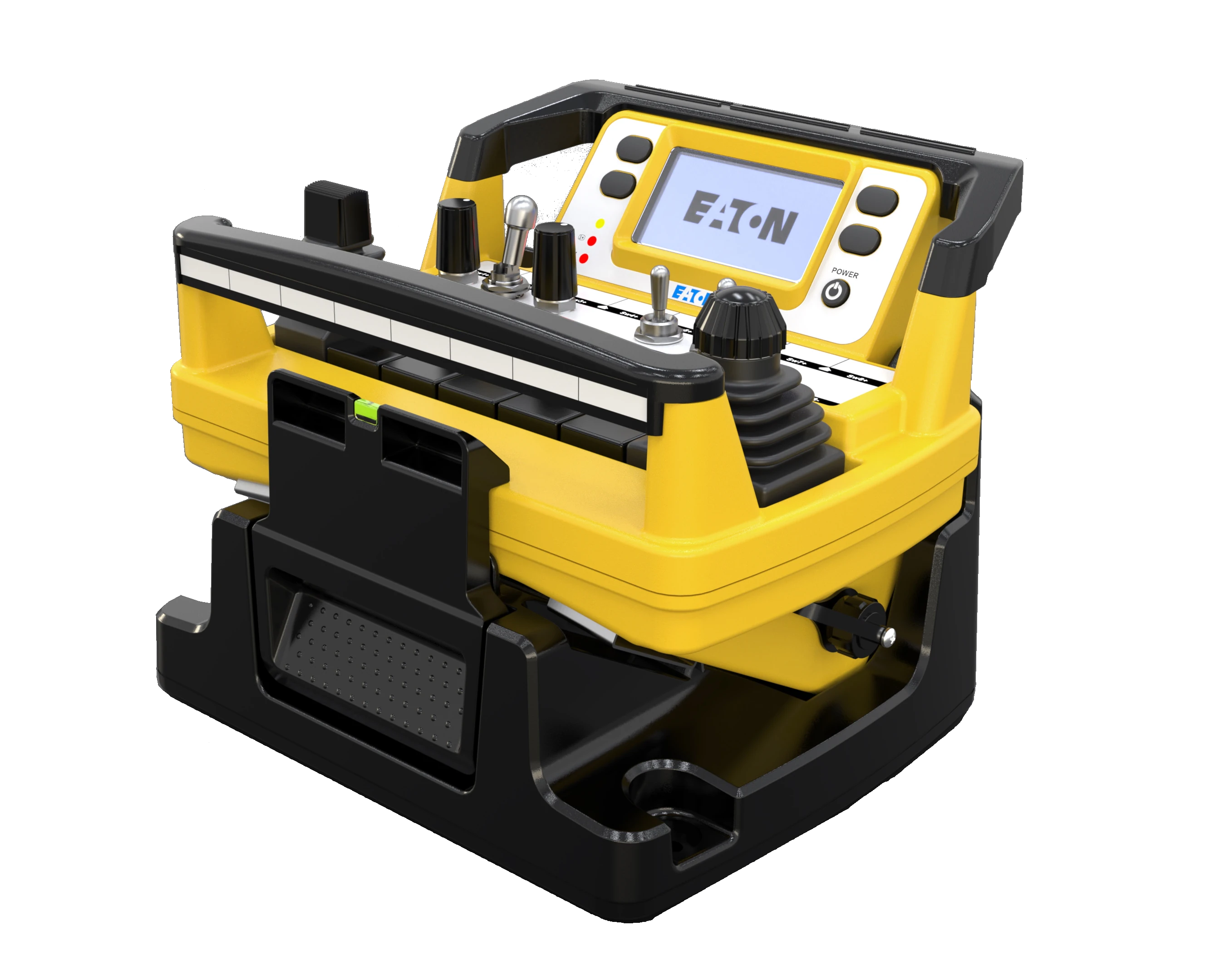
The Product

On a construction job site, the control system in an operator’s hands has to be as tough as the equipment it commands.

Eaton knew the successor to their TD3000 controller would need to keep working in the toughest conditions a job site delivers. They came to PDE with preliminary circuit board designs for the update, and brought PDE in to design the rugged housing that would protect it.

The Challenge

Harder Environment, Hard Requirements

Eaton’s TD3100 faced a set of constraints that leave very little room for error:

  • IP67 rated: fully sealed against dust ingress and temporary submersion up to 1 metre
  • 2-metre powered drop survival: the device must keep working after a drop from operator height onto concrete
  • New display and soft-key UI: a 3-inch backlit LCD and an updated control layout had to integrate into the housing without compromising the seal or the operator’s grip
  • Modular battery platform: the housing had to accept a new battery system shared across Eaton’s full line of wireless controls
  • Contactless charging cradle: a new cradle had to charge the unit without exposed contacts while holding it fast against the vibrations of a truck-mounted installation
  • Preserved form factor: operators trained on the TD3000 needed to pick up the TD3100 and immediately feel at home

Adding a display, soft keys, and a modular battery interface to a well-known form factor without breaking what made it reliable is a harder problem than starting from scratch.

TD3100 in Charging Dock
The Solution

Mechanical Design That Does the Heavy Lifting

PDE took on the full mechanical design scope for the TD3100, working within Eaton’s established industrial design direction to deliver an enclosure built to absorb repeated drops and sealed-environment cycling without losing function.

The addition of a display, menu buttons, and a removable battery pack called for a new sealing strategy from the ground up. Every interface, including the battery compartment, display window, control cutouts, and connector ports, received its own sealing analysis to reach IP67 across the assembly. Drop performance was addressed through the choice of wall thickness and an impact-resistant housing material.

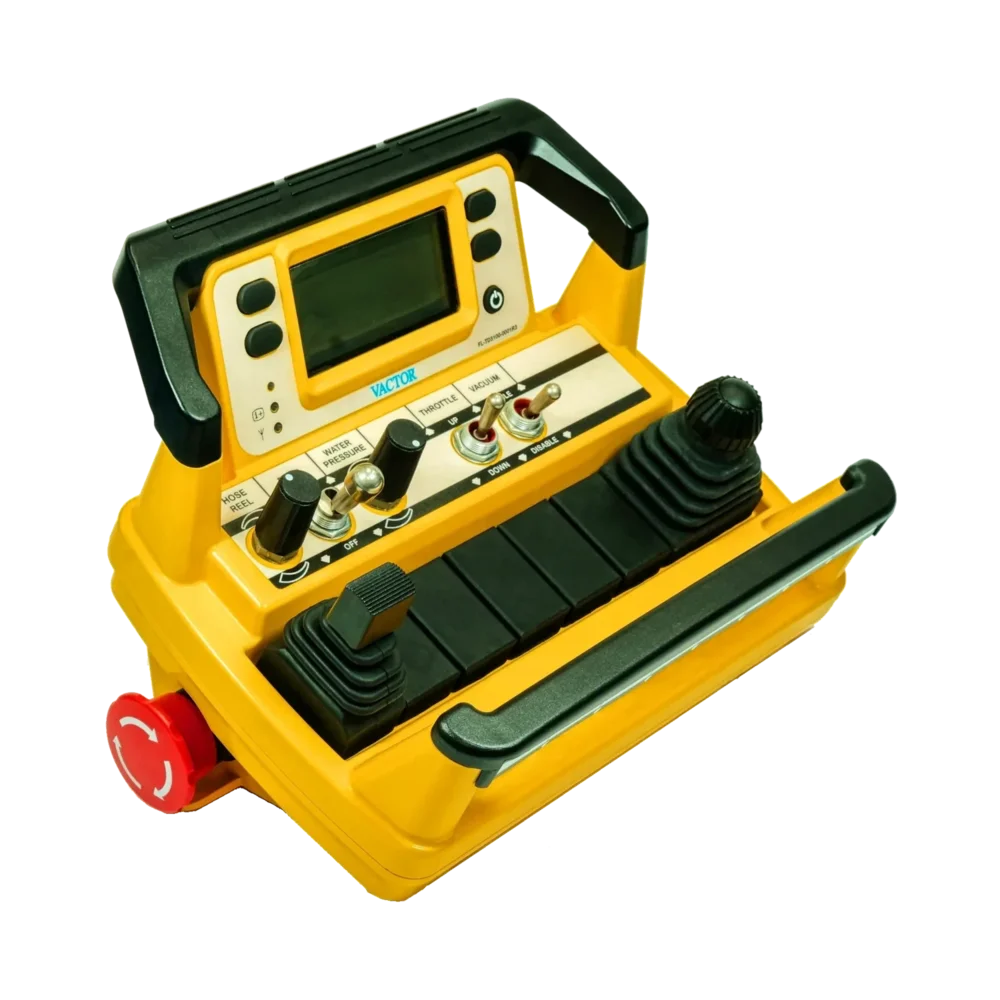
The removable battery pack had to hold IP67 at the battery-to-body joint and survive repeated removal. The pack is secured with a screw and released with a tool, and the same IP67 battery pack was carried across to the TD2100 and TD1140.

The charging cradle carried its own design problem. Contactless charging through the cradle base avoided the exposed contact surfaces that field environments tend to compromise over time. The cradle also had to physically retain the TD3100 through the kind of sustained vibration seen in truck-mounted crane installations, a requirement that shaped how the cradle holds the controller.

The Technologies Behind This Build

Mechanical Design
SolidWorks Injection Molding IP67 Sealing Impact-Resistant Design Contactless Charging Integration